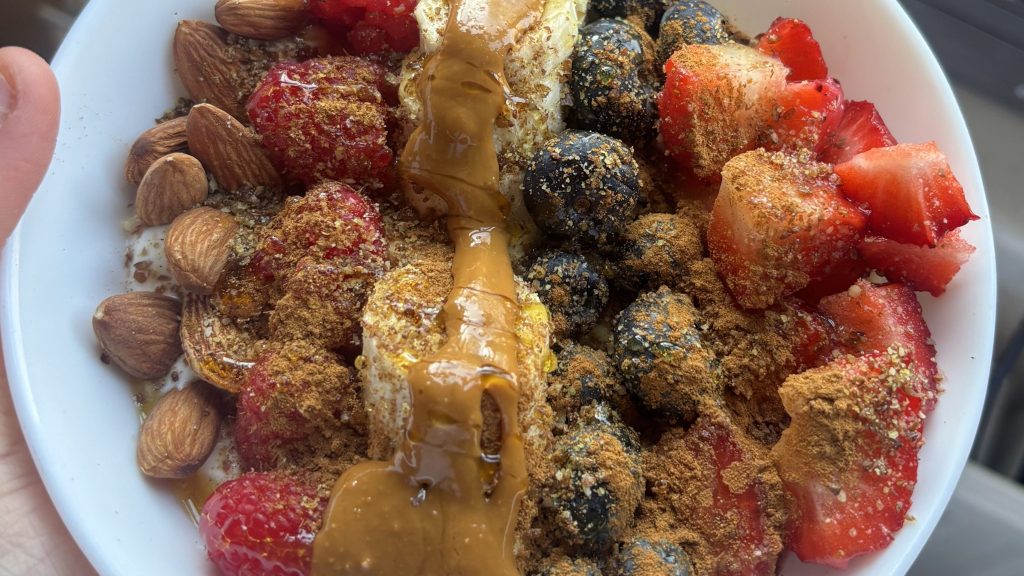
Bulking on a student budget can be tough as you feel like you need to buy more food than you usually would, racking up your weekly grocery spending limit. But, the good news is that it doesn’t have to be that way once you start being more strategic about what exactly it is you’re buying.
In this blog, I will be splitting the post into 3 parts: budgeting tips, science-backed bulking tips, and the best all-rounder cheap, high calorie and high protein foods to help you reach your seemingly impossible daily calorie and protein goal, whilst still remaining healthy.
A)Student Budget Tips
1) Shop by £/kg and £/100g protein
On UK supermarket shelves, the pack that looks cheap is often worse value.
- Always check the little unit price: £/kg (meat, cheese) or £/100g (dry goods).
- The larger pack is often more expensive, but better value. If you freeze your food, not only does it last basically forever, but you’re also saving money.
- For protein foods, your “value lens” is: protein per 100g + unit price. For a more in depth breakdown of the cheapest high protein foods, check out our other blog post, here.
This way, not only do you save money, you also save time as you have to do fewer “top up” shopping trips.
2) Base your bulk around “the Big 3”
If you’re not into the whole “meal planning2 thing, I recommend picking one from each category and repeating:
- Protein: frozen chicken thighs, eggs, lentils/beans, tinned fish
- Carb base: oats, rice, pasta, potatoes
- Calorie booster: peanut butter, oil, cheese (small amount)
This way you avoid buying 14 random ingredients that don’t combine into meals.
3) Use the freezer like it owes you money
This is the biggest student advantage if you use it properly:
- Buy the bigger pack when it’s better value and freeze
- Buy frozen vegetables and fruit so you’re not eating purely beige food and you’re still hitting your micro-nutrient goals whilst saving money. Frozen fruit and veg are often even healthier for you than buying fresh, and they last practically forever, and they save you SO much money and time.
Why it saves money: bulk packs + zero waste + fewer shops.
5) Build meals that “stretch” expensive protein
The best budget bulks don’t rely on only meat:
- mince + lentils
- chicken + beans
- tuna + pasta + frozen veg
This keeps protein high while cutting the cost per portion.
6) Cook once, eat twice (but don’t meal-prep 14 meals)
- Cook one big base (lentil chilli / chicken tray bake / mince sauce)
- Use it in 3 forms:
- bowl
- wrap
- pasta/rice
You use fewer ingredients, less waste, less delivery temptation because you don’t get bored of eating the same meal for days on end.
7) Plan your shop around what’s on promotion
Promos and “reduced to clear” food are useful when they apply to things you’ll buy anyway:
- meat/fish
- eggs/dairy
- dry carbs
Promos are NOT useful when they cause you to buy random nonsense.
10) Make one “cheap calorie” item do heavy lifting
If you’re bulking on a budget, you need a reliable calorie booster:
- oats (cheap base)
- peanut butter (dense calories)
- oil (cheap calorie multiplier)
This helps you hit surplus without buying extra meals.
B) Bulking Tips
1) Drink your surplus (liquid calories don’t get “compensated” as hard)
Your body tends to compensate less for calories you drink vs calories you chew, so liquid calories can push you into a surplus more easily. Smoothies/milk-based shakes are a cheat-code for bulking.
My go-to: milk + oats + PB + banana (+ yogurt if you can). If you drink this,, that’s an additional 300-700 calories and 15-25g of protein added to your daily goals.
2) Raise the energy density of your meals (same plate, more calories)
Energy density = calories per gram of food. Higher energy-dense meals make it easier to eat more calories without feeling like you’re in a mukbang. You don’t have to eat bigger meals, just add an energy rich source to make it denser:
- add 1–2 tbsp oil to rice/pasta
- add cheese to chilli/pasta
- add peanut butter to oats/yogurt
3) Use fat (it’s the cheapest calorie multiplier)
Fat is energy-dense (more calories per gram than carbs/protein), so adding a little fat is one of the easiest ways to push calories up without huge portions.
My advice: olive/veg oil is the budget calories final boss. A tablespoon here and there moves the needle.
4) Stop chasing “more protein than necessary” and spend the budget on calories
For gaining muscle with training, benefits of protein intake plateau around ~1.6 g/kg/day for many people. So if you’re already near that, the bigger limiter is often consistent surplus + training, not pushing protein to the moon. Focus on cheap calories to reach your surplus.
6) Choose bulking proteins that come with calories
If you’re bulking, picking proteins that aren’t ultra-lean can make it easier (for example: chicken thighs vs breast). You still get protein, but you’re getting extra calories, too.
7) Batch-cook one base and change the flavour so you don’t get bored (boredom kills bulks)
Appetite management is a big part of bulking. If you get bored you stop eating enough, and then bulking becomes hard and boring.
So, cook a big pot, then rotate:
- chilli bowls
- wraps
- pasta bake
- etc.
8) Don’t “accidentally diet” by eating only high-fibre volume foods
Fibre is great and healthy, but if your meals are all bulky salads/veg + lean protein, you’ll hit fullness before you hit calories.
C) Best All-Rounder Foods to Buy
Cheap + high calorie + high protein:
- 100% peanut butter
604 kcal / 100g + 27g protein / 100g: insane calorie density for bulking and decent protein too. - Mixed nuts
Around 616 kcal / 100g + 21.6g protein / 100g: high calories, good protein, easy snack calories. - Chopped mixed nuts (peanut-heavy mixes can be even higher protein)
634 kcal / 100g + 25.4g protein / 100g: very bulk-friendly. - Mature cheddar
416 kcal / 100g + 25.4g protein / 100g: great calories + protein topper (sandwiches, wraps, pasta), just be careful as it’s high sat fat/salt. - Dried red lentils (uncooked)
353 kcal / 100g + 26g protein / 100g: cheap, feeds well and bumps protein. - Porridge oats
376 kcal / 100g + 11g protein / 100g: not the highest protein, but very cheap calories + easy to add PB/milk to make it both. - Chicken thighs
218 kcal / 100g + 16.8g protein / 100g: higher calories than chicken breast and still solid protein (great for bulking). - Whole milk
64 kcal / 100ml + 3.4g protein / 100ml: easy liquid calories + protein, also has calcium/B12.
If you liked this blog post, have an inquiry, or would like to give us suggestions of what you would like to see next, let us know by contacting twogirlsonekitchenblog@gmail.com.
Join our newsletter if you would like to see more posts like this and want early access to our digital products coming soon.
 Two Girls, One Kitchen
Leave a comment